
Building Reliable AI Systems
Building reliable AI systems means designing for correctness, safety, and maintainability. For document Q&A and RAG, that includes retrieval accuracy, grounding, refusal when the answer isn't in the docs, and clear citations. Best practices span data, evaluation, and deployment.
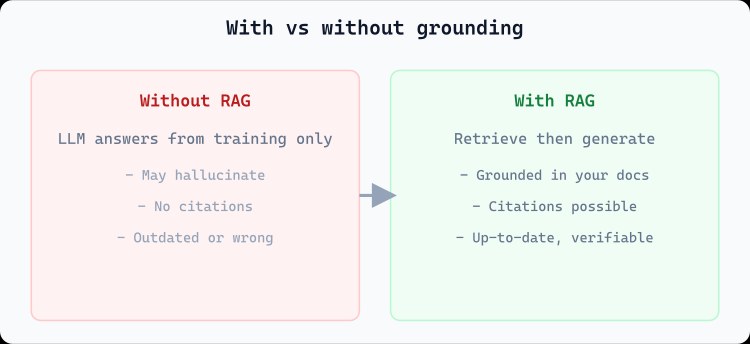
Retrieval and grounding
Ensure your retrieval step returns the right chunks. Tune chunk size and overlap, and test with real questions. In the prompt, instruct the model to answer only from the provided context and to cite. Validate that the model doesn't invent when the context is missing or irrelevant.
Evaluation examples
# Example: check that the model cites the right doc
def test_citation(question: str, expected_doc_id: str):
    chunks = retrieve(question)
    answer = llm.generate(context=chunks, question=question)
    assert expected_doc_id in answer.citations
    return True
Run adversarial tests (questions the docs can't answer), noisy-document tests, and long-document retrieval tests. Measure retrieval accuracy, citation accuracy, and refusal rate. Tools like FAQ Ally are built with these evaluation approaches in mind.
Checklist for production
# Reliability checklist
[ ] Retrieval returns correct chunks for sample questions
[ ] Model refuses when answer not in context (adversarial tests)
[ ] Citations point to the right source
[ ] No hallucination on out-of-domain or unanswerable questions
[ ] Long documents: answer found in correct section
[ ] Stale docs removed or re-indexed