
RAG ROI: Measuring Impact
· 7 min read
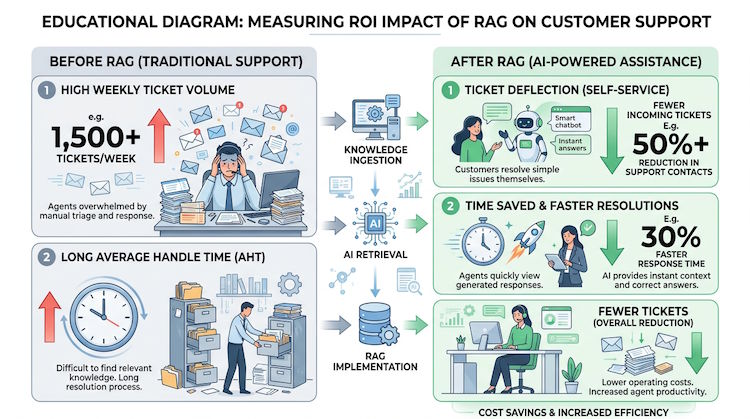
Measuring RAG ROI means tying the system to outcomes: time saved, deflection rate, consistency of answers, and fewer errors. Start with baseline metrics before RAG, then compare after deployment. Qualitative feedback from support and employees helps too.
Metrics that matter
Time to answer (for support or internal Q&A), number of questions deflected from humans, citation accuracy in evaluations, and user satisfaction. If the system refuses when it shouldn't or hallucinates, track those and tune retrieval and prompts.
python
# Example: track deflection and time
before_rag = { "tickets_per_week": 200, "avg_handle_mins": 12 }
after_rag  = { "tickets_per_week": 140, "avg_handle_mins": 8 }
deflection = (before_rag["tickets_per_week"] - after_rag["tickets_per_week"]) / before_rag["tickets_per_week"]
time_saved_per_ticket = before_rag["avg_handle_mins"] - after_rag["avg_handle_mins"]
Long-term value
Beyond immediate efficiency, RAG makes knowledge accessible and consistent. That improves onboarding, compliance, and decision quality. ROI calculations can include reduced training time and fewer errors from outdated or scattered information.
text
# Example ROI framing
# Input:  tickets/week, avg handle time, cost per agent hour
# Output: deflection rate, time saved, $ saved
# Intangibles: consistency, faster onboarding, fewer wrong answers