What is AI Document Search?
AI document search uses semantic understanding rather than keyword matching. By converting text into vectors (embeddings), systems can find documents that are conceptually similar to a query, even when the exact words don't match. That's why you can ask 'How do I reset my password?' and get the right policy section without the document containing that exact phrase.
How it works
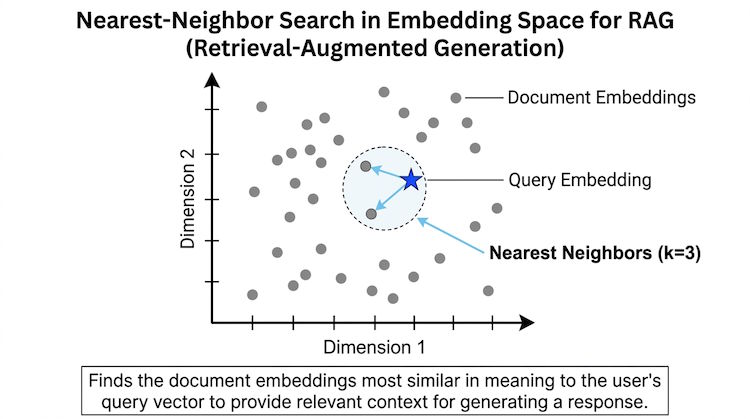
Queries and documents are turned into embeddings. The system then finds document chunks whose embeddings are closest to the query embedding. That's semantic search: meaning over keywords. It powers the retrieval step in RAG and is the backbone of modern document AI.
Where you see it
Document AI tools and knowledge assistants—such as FAQ Ally—implement this approach so teams can search across internal docs, policies, and resources. The result is faster answers and fewer repeated questions.
# Conceptual flow
query = "vacation policy for part-time staff"
query_embedding = embed(query)
results = vector_db.search(query_embedding, top_k=5)
# Returns chunks about leave, PTO, part-time, etc.
# even if the exact phrase "vacation policy" isn't in the doc
Keyword vs semantic search
Keyword search matches exact or stemmed terms. Semantic search matches meaning: 'PTO' and 'vacation' can be close in vector space even if the words differ. That's why AI document search handles natural-language questions better than traditional search, and why it sits at the heart of RAG retrieval.